

The Hearty Blog
Blood Pressure
Ubiquinol vs CoQ10 - What's the Difference?
CoQ10 Exists in Your Body Primarily in Two Forms:
If you’ve been researching CoQ10, you have likely noticed that there are two forms of CoQ10 supplements available: ubiquinone and ubiquinol.
Ubiquinone (the oxidized form of CoQ10)
Ubiquinol (the reduced form of CoQ10)
Your body utilizes both forms of CoQ10 and is constantly converting between ubiquinone and ubiquinol depending on its current need.
Studies show that when we are young, our bodies synthesize ubiquinone well, converting it readily to ubiquinol. But as we get older, the body's ability to convert ubiquinone to ubiquinol can diminish. Ubiquinol supplements contain a form of CoQ10 that has already been converted to its antioxidant form, ubiquinol – the form that fights excess free radicals and can help protect the body's cells from damage.
Oxidation is a normal process both in nature and in the human body. We see it at work in nature when a sliced apple turns brown or when iron rusts. In the human body, excess oxidation can damage healthy cells. Our bodies are designed for this process and are constantly producing new cells to replace the old. However, as we age and are exposed to certain environmental factors, the oxidation process can overwhelm the body’s ability to cope with it. Oxidation can lead to the formation of excess free radicals, unstable molecules that can cause cell damage. Ubiquinol is a powerful antioxidant that helps fight against free radicals.
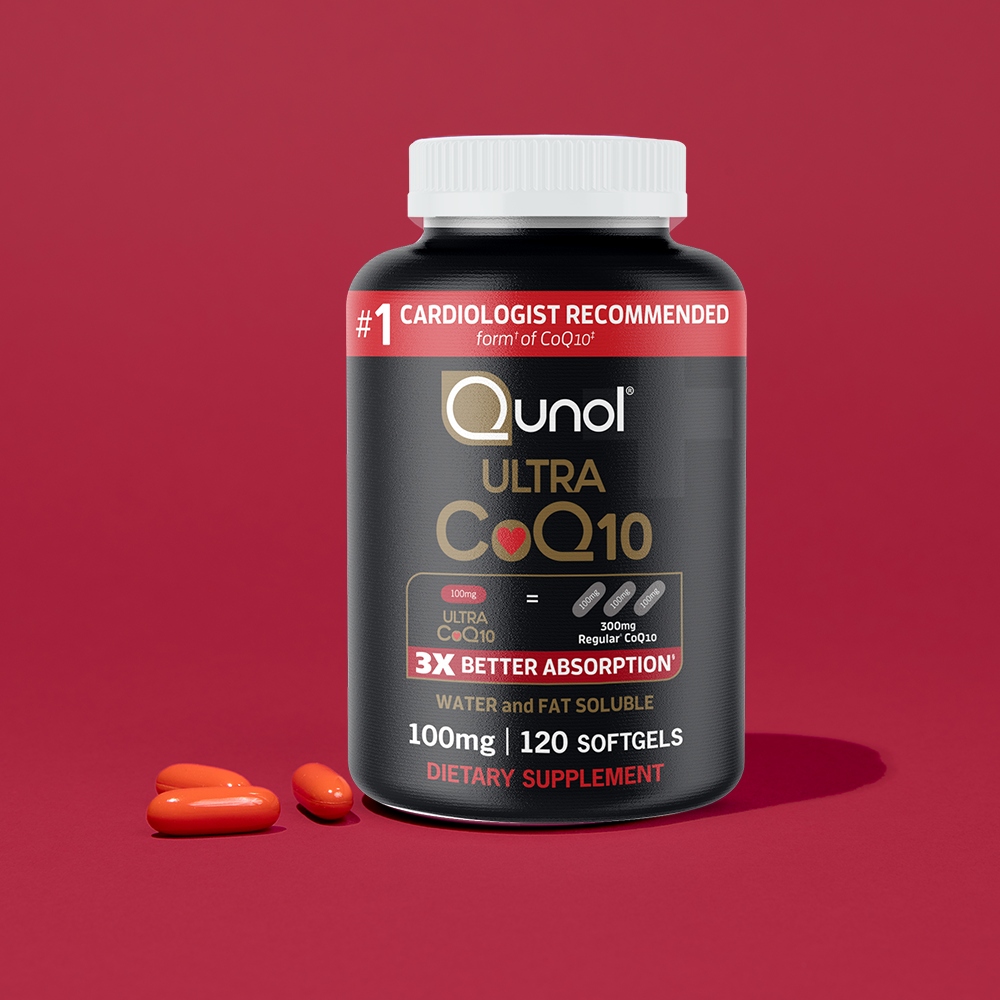
It's important to note that our Qunol Ultra and Mega are both water and fat-soluble and are better absorbed than a regular¹ form of CoQ10.
These statements have not been evaluated by the Food and Drug Administration. This product is not intended to diagnose, treat, cure, or prevent any disease.
1 Regular CoQ10 refers to unsolubilized ubiquinone in oil suspensions in soft gels and/or powder filled capsules/tablets
Blood Pressure
What Makes Your CoQ10 Levels Decline?
CoQ10 Levels Decline Naturally With Age
CoQ10 is endogenous to the human body – meaning that you produce it naturally and we all have it. However, our body’s natural ability to produce CoQ10 decreases as we age.
Unfortunately, the amount of CoQ10 we typically get from our regular dietary intake may not be enough to compensate for even our normal age-related decline in CoQ10 levels.
Cholesterol Lowering Medications – Statins – May Reduce Your CoQ10 Levels
Statins, or by their proper name “HMG-CoA reductase inhibitors”, are the type of cholesterol management medications most often prescribed in the United States.
Your body produces cholesterol in a pathway in your liver. It is within this same pathway that your body produces other essential compounds and chemicals including CoQ10. Because statins work by blocking the production of cholesterol in this pathway, they may also block the production of CoQ10.
This could potentially complicate other health issues and leave you vulnerable to side effects from your prescribed statins. Talk to your healthcare professional to learn more.
*These statements have not been evaluated by the Food and Drug Administration. This product is not intended to diagnose, treat, cure, or prevent any disease.
Blood Pressure
Benefits of CoQ10
Supports heart and vascular health
Promotes healthy blood pressure levels1
Essential for energy production
Beneficial to statin drug users2
Powerful antioxidant
CoQ0 is a naturally occurring nutrient-like coenzyme. The primary function of CoQ10 is to help with cellular energy production. It is the powerhouse of every cell in our bodies and exists at the most basic level of each cell’s operation- the mitochondria. It is in fact present in the cells of all living organisms, from bacteria to plants, all animals, and humans. CoQ10 is also an antioxidant and helps protect our cells from damaging molecules known as free radicals that may lead to cell damage.
The main benefit of taking a CoQ10 supplement is to assist you in restoring your CoQ10 levels that might have been depleted due to our natural aging process or due to a variety of external factors such as stress, and the use of cholesterol lowering statin drugs.*
Helps Support a Healthy Heart
No other organ in our body requires more energy and works harder than our heart. During an average lifetime, your heart will beat more than 2.5 billion times (that is more than 100,000 times a day!). It takes a lot of energy for your heart to operate at peak level. Since CoQ10 is so vital to the production of energy at the cellular level, it should come as no surprise that your heart has the highest concentration of CoQ10 found anywhere in the body. CoQ10 can help support heart and vascular health, and helps maintain healthy blood pressure already within a normal range.*
References
*These statements have not been evaluated by the Food and Drug Administration. This product is not intended to diagnose, treat, cure, or prevent any disease.
1Helps maintain healthy blood pressure already within a normal range.
2 Cholesterol-lowering statin drugs can deplete the body's natural levels of CoQ10. Qunol can help replenish lost CoQ10 due to statin drug therapy.
Blood Pressure
Why is CoQ10 the Most Recommended Supplement By Cardiologists?*
CoQ10 is Important for Heart HealthCoQ10 is a naturally occurring nutrient-like coenzyme that plays an important role in the production of 95% of the energy used by your body at the cellular level. CoQ10 is also a powerful antioxidant that can help protect your cells from damage. Unfortunately, your CoQ10 levels can drop due to age, stress, and cholesterol-lowering statin drug therapy.1 While small amounts of CoQ10 can be found in food, taking a daily CoQ10 supplement is the easiest way to increase your CoQ10 levels.CoQ10 and Cholesterol-Lowering Statin DrugsBoth cholesterol and CoQ10 are produced in the same pathway. Statins work by blocking this pathway, but they also block the production of CoQ10. Statin medications have been shown to lower CoQ10 levels by as much as 40% and the addition of a CoQ10 supplement to statin drug therapy can help replenish low CoQ10 levels.2
Click here to download our free Statin Side Effects e-Book! [link to statin side effects eBook landing page]
CoQ10 for Heart and Vascular HealthCoQ10 supports your cardiovascular system in two ways:
-It plays a role in producing the energy needed by your heart-It helps protect your heart muscle from damaging molecules such as free radicalsAccording to results from a multinational clinical study, long-term supplementation with CoQ10 is safe and effective for promoting healthy heart function.3CoQ10 can also help support blood pressure levels that are within normal ranges.
Water and Fat-Soluble Qunol® CoQ10 is the Better Choice for Heart Health
Qunol® CoQ10’s patented formulation is water and fat-soluble, unlike regular4 CoQ10 that does not dissolve in water and dissolves poorly in fat. Studies show that Qunol® Ultra is up to 3X better absorbed than regular4CoQ10 so it can help you reach optimal levels of CoQ10 in just weeks – rather than months, so you can experience the potential benefits faster.5
References
*AlphalmpactRx ProVoice Survey.
1Fuke, C., Krikorian, S.A., Couris, R.R.. (2000). Coenzyme Q10: a review of essential functions and clinical trials. US Pharmacist, 25(10), 28-41.2Ghirlanda G., Oradei A., Manto A., et al. Evidence of plasma CoQ10-lowering effect by HMG-CoA reductase inhibitors: a double-blind, placebo-controlled study. J Clin Pharmacol. 1993;33(3):226–229.3Mortensen SA, Rosenfeld F, Kumar A. The effect of coenzyme Q10 on morbidity and mortality in chronic heart failure: results from Q-SYMBIO: a randomized double-blind trial.4Regular CoQ10 refers to unsolubilized ubiquinone in oil suspensions in soft gels and/or powder filled capsules/tablets
5Chopra, R.K., et al. (1998). Bioavailability of Coenzyme Q1O in Humans. Internal. J. Vit. Nutr, Res. 68, 109-113. Received for publication August 4, 1997.

Blood Pressure
Stay On Beet: A Heart-Healthy Juice Recipe Inspired by Qunol Blood Pressure Chews
Support heart health with this easy beet juice recipe—rich in nitrates and a complement to Qunol Blood Pressure Chews for healthy circulation support.*
Blood Pressure
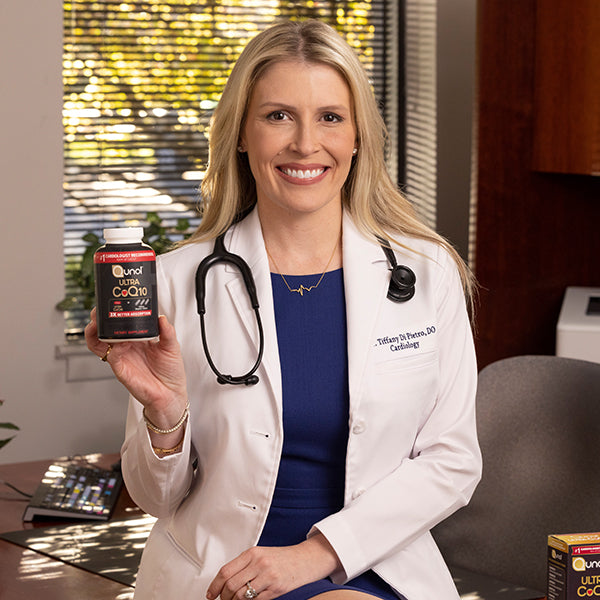
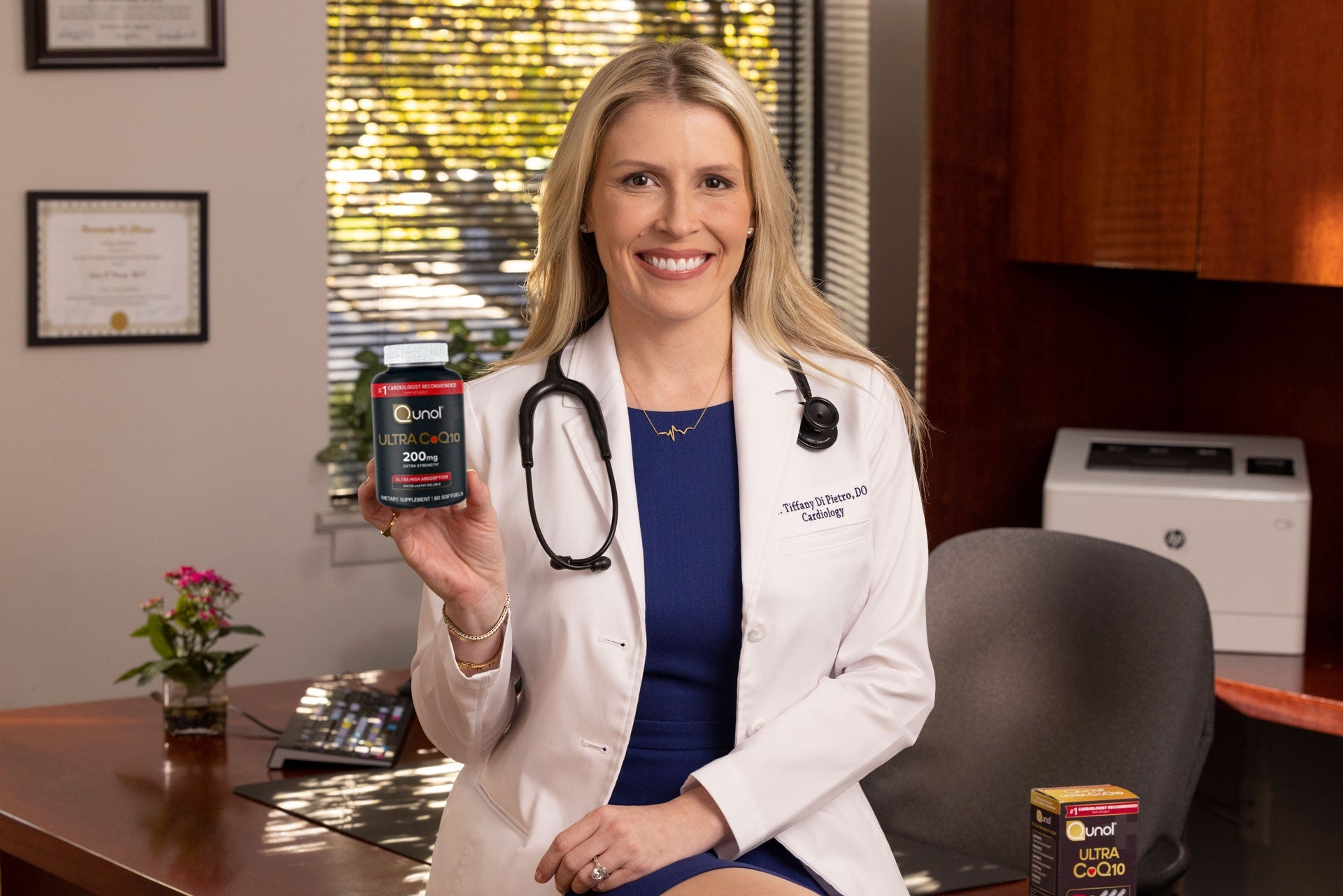
Qunol Answers: Your Top Heart Health Questions with Cardiologist, Dr. Tiffany DiPietro
Why is CoQ10 important for heart health? What's the difference between Ubiquinone and Ubiquinol?
Welcome to our Qunol Answers series. In honor of Heart Health Month, we're sharing the answers to these and more questions about heart health.
Blood Pressure
CoQ10 Acts as an Antioxidant
Coenzyme Q10 (CoQ10) is a nutrient that occurs naturally in our bodies. CoQ10 is also in many foods we eat. CoQ10 acts as an antioxidant, which helps protect our cells from damaging molecules known as free radicals.